Alumni portrait of Simon Libak Haugaard: Where Horses Meet Heart Rhythm Research
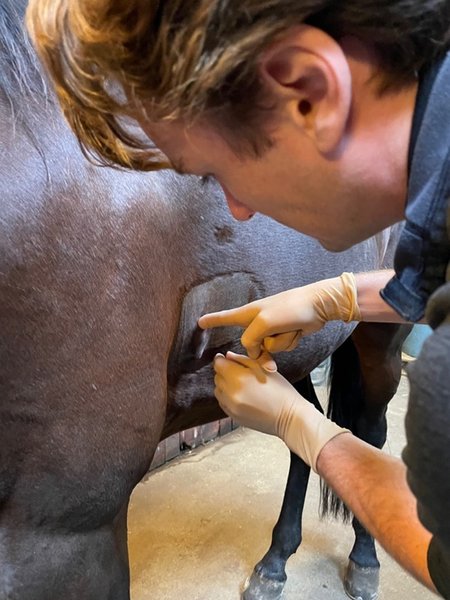
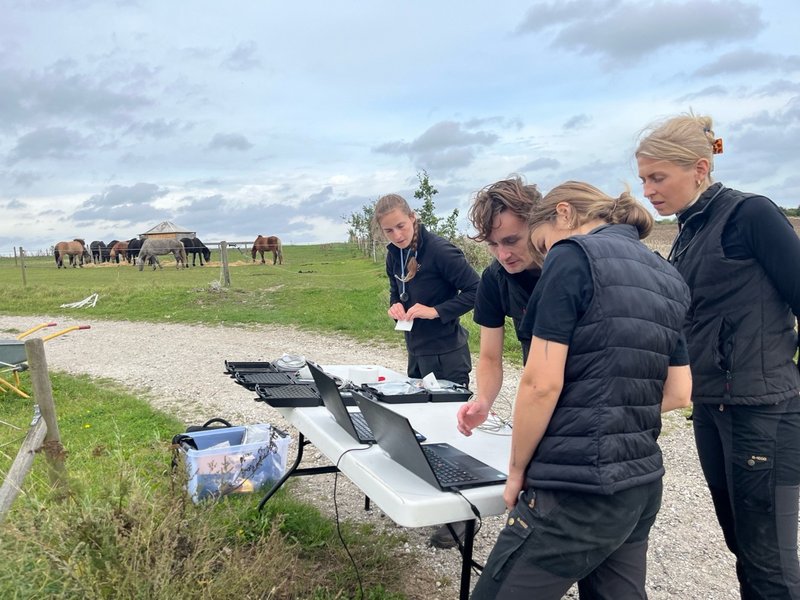
As a vet and assistant professor in the Equine Cardiac Group at the University of Copenhagen, Simon Libak Haugaard, is combining his love for horses and his fascination for heart research. In 2021, Simon became a DCAcademy grant recipient, initiating his journey as a PhD student, which he finished in 2025.

Investigating treatment of Atrial Fibrillation
When Simon was working as a horse vet in England, he fell in love with cardiac cases. So, when his future supervisor reached out to him regarding a PhD in Copenhagen on arrythmia in horses, Simon didn’t have to think twice.
In 2021, Simon began his project “Investigating the Role of Fibroblast Activation in Atrial Fibrillation Pathophysiology”. In humans, atrial fibrillation (AF) is the most common sustained arrhythmia, and the incidence is rising. Several treatment options exist, but the development of heart fibrosis leads to treatment resistance and sometimes treatment failure. By combining horses and heart research, the project was dedicated to investigating the role of heart fibrosis in AF using a horse model of chronic AF, exploring whether heart fibroblasts hold the potential to serve as a novel therapeutic target preventing AF associated heart remodeling. Although the original hypothesis proved more complex to answer than expected, the project still revealed new insights into preventing atrial changes.
Reflecting upon his time as a PhD student
The first thing that comes to mind when Simon reflects upon his time as a PhD student is the wonderful people he has met and the many places, he has been fortunate to visit. Simon also considers “the personal and professional growth that came along the way” as the most defining part of his early research career. During his PhD, Sarah Nissen, at that time postdoc in his group, had a significant impact as Simon highlights: “Sarah showed me that you can be an excellent scientist and still be kind, funny, and generous”. However, his research journey did not come without its challenges.
Learning to prioritise
For Simon, one of the main challenges in research was time. Being curious by nature, every new research projects always look exciting for him. However, learning how “to prioritise and sometimes say no has been the hardest lesson” Simon explains. Thus, working on this project Simon has learned more about how to manage time and prioritise the most important things.
Becoming a DCAcademy grant recipient
For Simon, the DCAcademy grant has played an important role in his career path. When interviewing Simon about the DCAcademy grant’s impact, he highlights: “Without DCAcademy, I likely wouldn’t have had the chance to pursue a PhD or a work life in research”. It also broadened his network and shaped his future: “It genuinely changed my path and introduced me to some of the most wonderful people”.
Supervising the next generation of vets
Today, Simon is an assistant professor in the Equine Cardiac Group at the University of Copenhagen. When asked why he chose this career path, he explains: “I get to keep exploring AF, teach and supervise the next generation of vets, and do something that feels meaningful to me every day”. Combining veterinary work with biomedical research, Simon’s work today brings together his passion for cardiovascular science and his love for animals.
On a mission to prove that science can be both fun and fulfilling
Ten years from now, Simon hopes that he will still be doing research and having fun while doing so. Furthermore, he aspires to make “young researchers feel that science can be both fun and deeply fulfilling”. Looking ahead, he aims to continue exploring AF while inspiring teaching the next generation of vets.